Partial Dentures: Types, Costs, and Choosing the Right Fit for You
May 13, 2026
What Teeth Bonding Costs in Newport Beach and What to Expect
May 17, 2026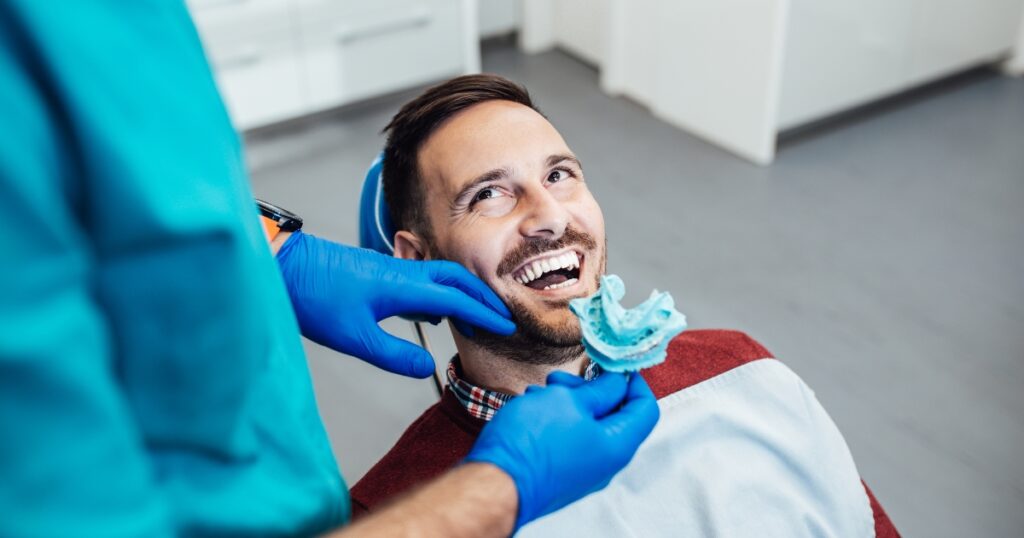
Losing most or all of your natural teeth can feel devastating, affecting not just your ability to eat and speak comfortably, but also your confidence in social situations and overall quality of life. Modern full-mouth dental implants have revolutionized tooth replacement by offering a permanent, stable solution that looks, feels, and functions like natural teeth. Unlike removable dentures that rest on your gums, full-mouth tooth replacements are surgically anchored into your jawbone, providing unmatched stability and preventing the bone loss that typically occurs after tooth loss. This advanced approach eliminates common denture problems, including slipping, clicking, dietary restrictions, and the need for messy adhesives.
This comprehensive guide walks you through everything you need to know about full-mouth implant restoration in 2026, from understanding how the technology works to realistic cost expectations and financing options. You’ll learn about different implant protocols, including All-on-4 and All-on-6 systems, discover whether you’re a candidate even if you’ve experienced bone loss, and understand the complete treatment timeline from initial consultation through final restoration. Whether you’re facing complete tooth loss or have been struggling with failing teeth or uncomfortable dentures, understanding your options for full-mouth dental implants is the first step toward reclaiming your smile and your confidence.
What Are Full-Mouth Dental Implants and How Do They Work?
Full-mouth dental implants represent a complete tooth replacement system that uses titanium posts surgically placed into your jawbone to support a full arch of prosthetic teeth. Unlike traditional dentures that simply rest on your gums and rely on suction or adhesives to stay in place, full-mouth implant restoration is permanently anchored into your jaw through a process called osseointegration, where the titanium implant posts fuse with your natural bone tissue over several months to create a stable foundation. The prosthetic teeth attached to these implants are custom-designed to match your facial structure, skin tone, and aesthetic preferences, resulting in a natural-looking smile that restores both function and appearance. Full-mouth dental implants can withstand normal biting and chewing forces just like natural teeth. This permanent solution provides stability and comfort that dentures simply cannot match.
The most popular protocols for full-mouth tooth replacement are the All-on-4 and All-on-6 systems, which use strategically placed implants to support an entire arch of teeth. The All-on-4 dental implants cost is often lower because it requires just four implants per arch, with the back implants angled up to 45 degrees to maximize contact with existing bone and avoid the need for bone grafting in many cases. The All-on-6 system uses six implants per arch, providing additional support and stability that some patients prefer, particularly those with stronger bite forces or specific anatomic considerations. Both approaches can often accommodate same day dental implant procedure options, meaning you may walk out of your surgical appointment with temporary teeth already attached to your new implants. The final prosthetic teeth use high-quality porcelain or zirconia that resist staining and wear. These materials are mounted on a titanium or zirconia framework that connects to the implant posts through precision abutments.
| Implant Protocol | Number of Implants | Treatment Time | Best For |
|---|---|---|---|
| All-on-4 | 4 per arch | Often, same-day teeth are possible | Patients with moderate bone loss |
| All-on-6 | 6 per arch | 3-6 months total | Patients seeking maximum stability |
| Traditional Full Mouth | 6-8 per arch | 4-9 months with healing time | Patients with adequate bone density |
| Zygomatic Implants | 2-4 zygomatic + 2-4 standard | Same-day teeth often available | Severe upper jaw bone loss |
Full-Mouth Dental Implants Cost Breakdown and Financing Options
Understanding the investment required for full-mouth tooth replacement is crucial for planning your treatment, and costs in 2026 typically range from $20,000 to $50,000 per arch, depending on several factors. The all-on-4 dental implants cost generally falls on the lower end of this spectrum at $20,000 to $30,000 per arch because it requires fewer implants and often eliminates the need for bone grafting procedures. All-on-6 systems typically cost $25,000 to $35,000 per arch due to the additional implants and surgical complexity, while traditional full-mouth dental implants with 6-8 implants per arch can range from $30,000 to $50,000 per arch. These price ranges reflect the complete treatment, including consultation and imaging, surgical placement, temporary prosthetics, healing abutments, and the final custom-crafted permanent teeth. Geographic location and the expertise of your dental team also influence where your investment falls within these ranges.
Several specific factors influence where your full-mouth implant restoration investment falls within these ranges, and understanding these variables helps you evaluate treatment proposals accurately. The materials chosen for your final prosthetic teeth make a substantial difference, with acrylic options being more affordable but less durable than premium porcelain or zirconia restorations that offer superior aesthetics and longevity. Whether you require bone grafting procedures to augment insufficient bone volume adds $3,000 to $15,000 to your total cost, depending on the extent of grafting needed. IV sedation adds $500 to $1,500 per appointment for patients who prefer deeper relaxation during surgery. The experience level and specialization of your dental team also impact cost, as board-certified prosthodontists or oral surgeons with advanced training in full arch restoration typically charge more than general dentists but offer expertise that can significantly affect your long-term outcomes. These factors combine to create your personalized treatment investment.
- Full-mouth dental implants provide better lifetime value than dentures, which require replacement every 5-7 years at $2,000 to $8,000 per set plus ongoing adhesive costs of $200 to $500 annually.
- Most dental insurance plans classify full-mouth tooth replacement as cosmetic and provide minimal coverage, though some plans may cover a portion of the prosthetic teeth component at 20-50% of their allowable fee schedule.
- Many practices offer in-house financing plans with monthly payments ranging from $300 to $800, depending on the total cost and repayment term, making full-mouth implant restoration accessible without requiring the full amount upfront.
- Health Savings Accounts (HSA) and Flexible Spending Accounts (FSA) can be used for full-mouth implant restoration, allowing you to pay with pre-tax dollars and reduce your effective cost by 20-30%, depending on your tax bracket.
The Full-Mouth Dental Implant Process: From Consultation to Final Restoration
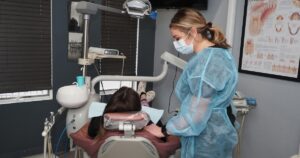
The journey to full-mouth implant restoration begins with a comprehensive consultation that includes advanced 3D cone beam CT imaging to assess your bone density, sinus locations, nerve pathways, and anatomical structures. During this initial appointment, your dental team will discuss your medical history, current medications, and lifestyle factors that might affect healing. The 3D imaging allows for precise virtual planning of implant placement, determining the optimal positions, angles, and depths for each implant post to maximize stability and avoid anatomical structures. Many practices use computer-guided surgery technology that translates this virtual plan into a custom surgical guide, ensuring the implants are placed exactly as planned with minimal invasiveness. This planning phase also determines whether you’re a candidate for same-day teeth, which depends on your bone quality, the stability achieved during implant placement, and your overall health status.
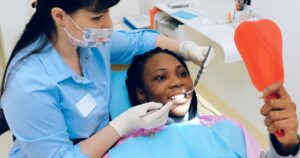
The surgical day typically takes 2-4 hours per arch for extracting failing teeth, placing implant posts, and potentially attaching temporary teeth if you’re a candidate for immediate loading. What to expect during implant surgery includes receiving your chosen sedation method, having the surgical sites carefully prepared and sterilized, and experiencing minimal discomfort due to local anesthesia that keeps the area completely numb throughout the procedure. If you receive same-day temporary teeth, these are designed to look natural and allow you to eat soft foods immediately, though you’ll need to follow a modified diet for the first 3-4 months while the implants integrate with your bone. The healing period typically lasts 3-6 months, during which you’ll have follow-up appointments to monitor integration and ensure proper healing without infection or complications. Once osseointegration is complete, you’ll return for final impressions and the attachment of your permanent prosthetic teeth, which are custom-crafted in a dental laboratory to match your desired shade, shape, and size specifications.
| Treatment Phase | Timeline | What Happens |
|---|---|---|
| Consultation & Planning | 1-2 weeks before surgery | 3D imaging, treatment planning, and medical clearance |
| Surgical Placement | Day 1 (2-4 hours per arch) | Implant placement, possible same-day temporary teeth |
| Initial Healing | First 2 weeks | Soft diet, swelling management, suture removal |
| Osseointegration | 3-6 months | Bone fusion with implants, gradual diet expansion |
| Final Restoration | 2-3 appointments over 2-4 weeks | Impressions, try-in, permanent teeth attachment |
Restore Your Smile with Confidence at Newport Beach Smile Studio
Choosing the right dental practice for your full-mouth dental implants is one of the most important decisions you’ll make in your treatment journey, and Newport Beach Smile Studio combines advanced technology with personalized care to deliver exceptional results for Orange County patients. Our team utilizes state-of-the-art 3D imaging and computer-guided surgery to plan and execute your full mouth reconstruction with implants with precision, ensuring optimal implant placement and natural-looking aesthetic outcomes that complement your facial features. Whether you’re seeking full arch tooth replacement options after years of denture frustration or facing the reality of failing teeth that need comprehensive restoration, our experienced team will guide you through every step of the process with compassion and expertise. We believe in transparent communication and will provide detailed cost breakdowns during your consultation, ensuring you understand every aspect of your investment. Our comfortable, modern facility is designed to put anxious patients at ease throughout the treatment process. We offer comprehensive financing options and will work with you to create a treatment plan that fits your timeline and budget while never compromising on quality. Schedule your consultation today to discover how full-mouth implant restoration can transform not just your smile, but your confidence, your ability to enjoy your favorite foods, and your overall quality of life for decades to come.
FAQs About Full-Mouth Dental Implants
Am I a candidate for dental implants if I have bone loss?
Many patients with bone loss can still receive full-mouth dental implants through advanced techniques like zygomatic implants that anchor into the cheekbone or bone grafting procedures that rebuild lost bone volume. A 3D CT scan during your consultation will determine the best approach for your specific bone density and jaw structure, with options available for even severe bone loss cases.
How long do full mouth implants last?
With proper care and maintenance, including regular dental cleanings and good home hygiene, full-mouth dental implants can last 20-30 years or even a lifetime. The titanium implant posts themselves can be permanent fixtures in your jawbone, while the prosthetic teeth may need replacement every 10-15 years, depending on wear and the materials chosen.
What’s the difference between All-on-4 dental implants and traditional full mouth implants?
All-on-4 uses just four strategically angled implants per arch to support a full set of teeth, often allowing same-day placement without bone grafting and reducing overall treatment cost. Traditional full-mouth dental implants may require 6-8 implants per arch and a longer treatment time, but offer additional stability and distribution of biting forces that some patients prefer.
Can I eat normally with full-mouth dental implants?
Yes, they restore 70-80% of natural biting force, allowing you to confidently eat steak, apples, corn on the cob, and other foods that are difficult or impossible with traditional dentures. After the initial healing period of 3-6 months, there are virtually no dietary restrictions, and you can enjoy your favorite foods without worry about slipping or discomfort.
How does the dental implants vs dentures comparison look in terms of long-term cost?
While full-mouth dental implants have a higher upfront investment of $20,000-$50,000 per arch, traditional dentures require replacement every 5-7 years at $2,000-$8,000 per set plus ongoing costs for adhesives, adjustments, and relining. Over 20 years, full-mouth dental implants often prove more cost-effective while providing dramatically superior function, comfort, and preservation of your jawbone structure.