

Dentures vs Implants: Finding the Best Solution for Your Missing Teeth
December 13, 2025
How Long Do Veneers Last? A Complete Guide to Veneer Lifespan and Maintenance
December 15, 2025
When a tooth becomes severely decayed or infected, patients often face a critical decision: root canal vs. extraction. Both treatments address dental pain and eliminate infection, but they take fundamentally different approaches to solving the problem. A root canal saves your natural tooth by removing infected tissue, while an extraction removes the entire tooth from your mouth.
Understanding the differences between these dental procedures helps you make an informed decision about your oral health. Factors including the condition of your tooth, your overall dental health, budget considerations, and long-term goals all influence which treatment option best serves your needs. Working closely with your dentist ensures you choose the approach that protects both your immediate comfort and your future smile.
Understanding Root Canal Treatment
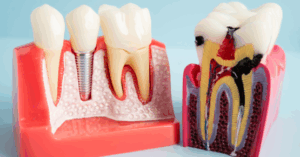
A root canal, also called endodontic therapy, is a dental procedure designed to save a tooth that has become infected or severely damaged. During treatment, your dentist or endodontist removes the infected pulp tissue from inside the tooth, cleans and disinfects the root canals, and seals the space to prevent future infection.
The procedure is performed under local anesthesia and typically requires one to two appointments. After a root canal, the treated tooth usually needs a dental crown to restore its strength and protect it from fracture. When successful, a root canal allows you to keep your natural tooth, maintaining your bite alignment and preserving your smile’s appearance for many years.
Root canals have earned an undeserved reputation for being painful, but modern techniques and anesthesia make the procedure no more uncomfortable than getting a filling. Most patients report that the relief from their toothache far outweighs any temporary discomfort during recovery.
Understanding Tooth Extraction
Tooth extraction involves completely removing a damaged or infected tooth from its socket in the jawbone. Extractions may be simple, where the tooth is visible and can be removed with dental instruments, or surgical, where the tooth is impacted or broken below the gumline and requires a more involved procedure.
Extractions are performed under local anesthesia, with sedation options available for anxious patients or complex cases. Recovery typically takes one to two weeks, during which you’ll need to follow post-operative instructions to ensure proper healing and prevent complications like dry socket.
While extraction eliminates the immediate problem, removing a tooth creates a gap that can lead to shifting of surrounding teeth, bone loss in the jaw, and changes to your bite alignment. Most dentists recommend replacing extracted teeth with dental implants, bridges, or partial dentures to prevent these long-term consequences.
Key Differences Between Root Canal and Extraction
Choosing between root canal and extraction requires understanding how these treatments differ in their approach, outcomes, and long-term implications. Each option has distinct advantages and limitations depending on your specific situation.
Saving vs Removing the Tooth
The fundamental difference between these treatments lies in whether your natural tooth is preserved. A root canal keeps your tooth in place, maintaining your natural bite and eliminating the need for replacement prosthetics. Your natural tooth continues to function normally for chewing and speaking.
Extraction permanently removes the tooth, which solves the immediate problem but creates new considerations. Without replacement, the gap left behind allows neighboring teeth to shift, opposing teeth to over-erupt, and jawbone to deteriorate. While extraction may seem like the simpler solution, the true cost includes eventual tooth replacement.
| Factor | Root Canal | Tooth Extraction |
| Outcome | Saves natural tooth | Removes tooth entirely |
| Procedure Time | 1-2 hours per appointment | 20-40 minutes typically |
| Number of Visits | 1-2 appointments + crown | 1. later |
| Recovery Time | 1-3 days mild discomfort | 1-2 weeks healing |
| Preserves Jawbone | Yes, natural root remains | No, bone loss begins |
| Requires Follow-Up Restoration | Crown needed | Implant, bridge or denture recommended |
| Average Cost | $1,000 – $1,800 + crown | $150 – $400 + replacement cost |
| Success Rate | 85-97% | 100% (tooth removed) |
| Long-Term Prognosis | 10-15+ years with the crown | Permanent if replaced properly |
Factors to Consider When Choosing
Several important factors influence whether root canal or extraction is the better choice for your damaged tooth. Discussing these considerations with your dentist helps ensure you select the treatment that offers the best outcome for your unique situation.
- Tooth condition: If your tooth has sufficient healthy structure remaining and the infection is limited to the pulp, a root canal can likely save it. Teeth with extensive decay, severe fractures extending below the gumline, or significant bone loss may not be salvageable.
- Tooth location: Front teeth and premolars are often worth saving due to their visibility and importance for aesthetics. However, all teeth contribute to proper chewing function and bite alignment, making preservation valuable throughout the mouth.
- Long-term prognosis: Consider the likelihood of long-term success. A tooth with a questionable prognosis after a root canal may eventually require extraction anyway, while a tooth with good remaining structure has excellent chances of lasting many years.
- Cost considerations: Root canals cost more upfront than simple extractions, but extraction plus tooth replacement often exceeds the total cost of root canal therapy. Consider the complete financial picture when making your decision.
- Time constraints: If you need a quick solution, extraction provides immediate resolution. Root canals require additional time for the crown placement, though they avoid the lengthy implant process needed after extraction.
- Overall oral health: Patients with healthy gums and good oral hygiene are typically better candidates for root canal success. Those with periodontal disease or difficulty maintaining oral health may face higher risks of treatment failure.
When to Choose a Root Canal
A root canal is typically the preferred treatment when your natural tooth can be saved and has a favorable long-term prognosis. Preserving your natural tooth maintains proper bite alignment, provides a natural chewing sensation, and avoids the cost and complexity of tooth replacement.
Choose a root canal when the tooth has adequate remaining structure after decay removal, the infection is confined to the pulp chamber and root canals, X-rays show healthy bone surrounding the tooth roots, and you want to preserve your natural smile. Teeth that have already received successful root canals can sometimes be retreated if a new infection develops.
Your dentist may recommend root canal therapy for teeth that are strategically important for supporting bridges or partial dentures, as keeping these anchor teeth helps maintain other restorations in your mouth.

When to Choose Extraction
Extraction becomes the better choice when a tooth cannot be reliably saved or when keeping it poses risks to your overall oral health. While losing a natural tooth isn’t ideal, extraction is sometimes the most practical path forward.
Choose extraction when the tooth has extensive structural damage that cannot support a crown, a vertical root fracture makes the tooth non-restorable, severe periodontal disease has destroyed supporting bone, previous root canal treatment has failed and retreatment isn’t viable, or the cost of saving the tooth exceeds the cost of replacement with an implant.
Wisdom teeth with infections or decay are typically extracted rather than treated with root canals, as these teeth aren’t essential for chewing function and are difficult to restore effectively.
The Importance of Replacing Extracted Teeth
If you and your dentist decide extraction is the best option, planning for tooth replacement should be part of the conversation. Leaving gaps in your smile leads to consequences that worsen over time and become more expensive to address.
Without a tooth root stimulating the jawbone, bone resorption begins almost immediately after extraction. This bone loss can compromise adjacent teeth and make future implant placement more difficult or impossible without bone grafting. Neighboring teeth begin shifting toward the gap, creating bite problems and increasing decay and gum disease risk in newly crowded areas.
Dental implants provide the best replacement option because they prevent bone loss and function like natural teeth. Bridges and partial dentures offer more affordable alternatives, though they don’t preserve bone and may require replacement over time.
Get to the Root of Your Decision: Trust Newport Smile With Your Care
Deciding between root canal and extraction requires expert evaluation and honest guidance about which treatment offers the best outcome for your specific tooth. Whether saving your natural tooth is possible or extraction provides the most practical path forward, the experienced team at Newport Smile is committed to helping you understand your options and make a confident decision about your dental care.
Don’t let tooth pain or uncertainty about treatment delay necessary care. Contact Newport Smile today to schedule your evaluation and receive a personalized treatment recommendation. Our skilled dental professionals will thoroughly examine your tooth, explain the pros and cons of each approach, and support you through whichever treatment best serves your long-term oral health. Your comfort and your smile are our priorities.
FAQs
-
Is a root canal more painful than an extraction?
Neither procedure should be painful during treatment, thanks to modern anesthesia. Root canals have an undeserved reputation for pain, but most patients report that the procedure feels similar to getting a filling. Extractions may involve more post-operative discomfort and a longer recovery period, particularly for surgical extractions. Most patients find root canal recovery easier than extraction recovery.
-
How do I know if my tooth can be saved with a root canal?
Your dentist will evaluate your tooth using X-rays and clinical examination to determine if root canal treatment is viable. Teeth with sufficient remaining structure, infections confined to the pulp, healthy surrounding bone, and no vertical fractures are typically good candidates. Your dentist will honestly advise you if extraction is the better option for your situation.
-
What happens if I choose extraction but don’t replace the tooth?
Failing to replace an extracted tooth leads to several complications over time. Adjacent teeth shift toward the gap, opposing teeth over-erupt, the jawbone deteriorates without stimulation from a tooth root, and your bite alignment changes. These consequences worsen over time and become more expensive to correct, making tooth replacement an important investment in your oral health.
-
Can a tooth that needs extraction ever be saved with a root canal instead?
Sometimes teeth initially recommended for extraction can be saved with root canal therapy, particularly if the recommendation was based on infection alone rather than structural damage. Seeking a second opinion from an endodontist, a root canal specialist, may reveal options your general dentist didn’t consider. However, some teeth genuinely cannot be saved regardless of the treatment approach.
-
Which treatment does dental insurance typically cover better?
Most dental insurance plans cover root canals and extractions at similar rates, typically 50% to 80% after deductibles for these major procedures. However, the crown needed after a root canal and the implant or bridge needed after extraction may have different coverage levels. Review your specific plan benefits and discuss costs with your dental office before treatment.